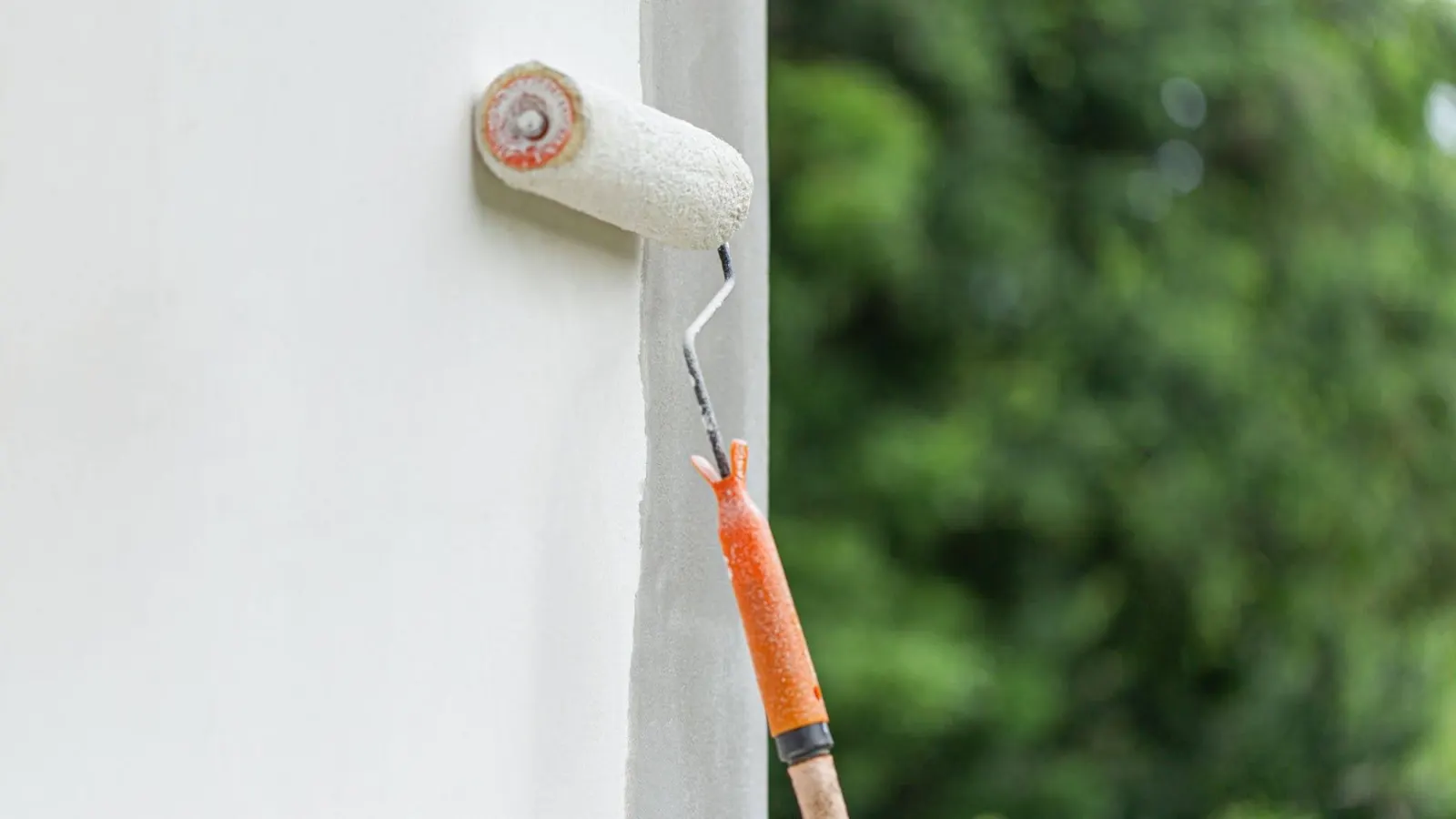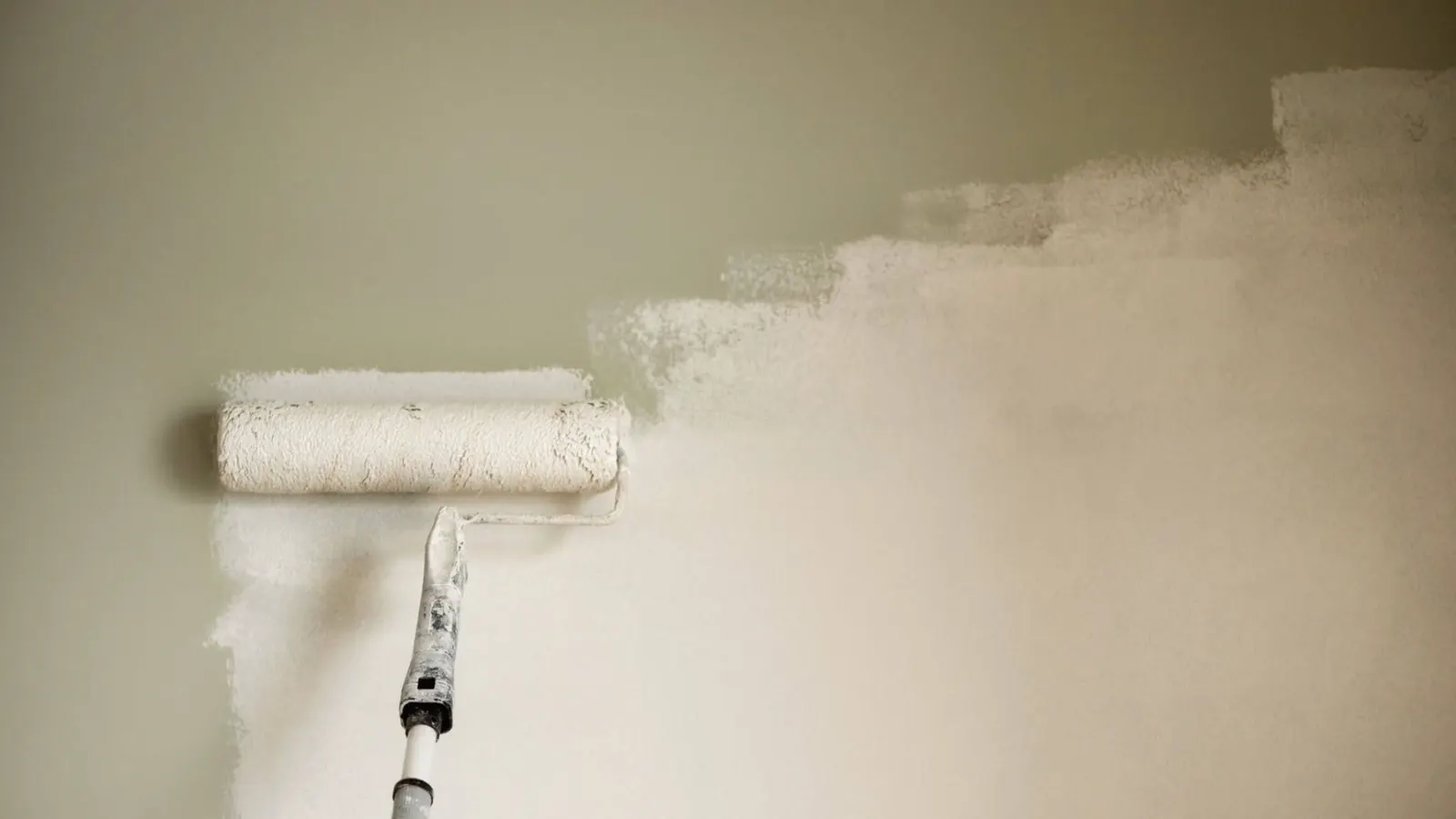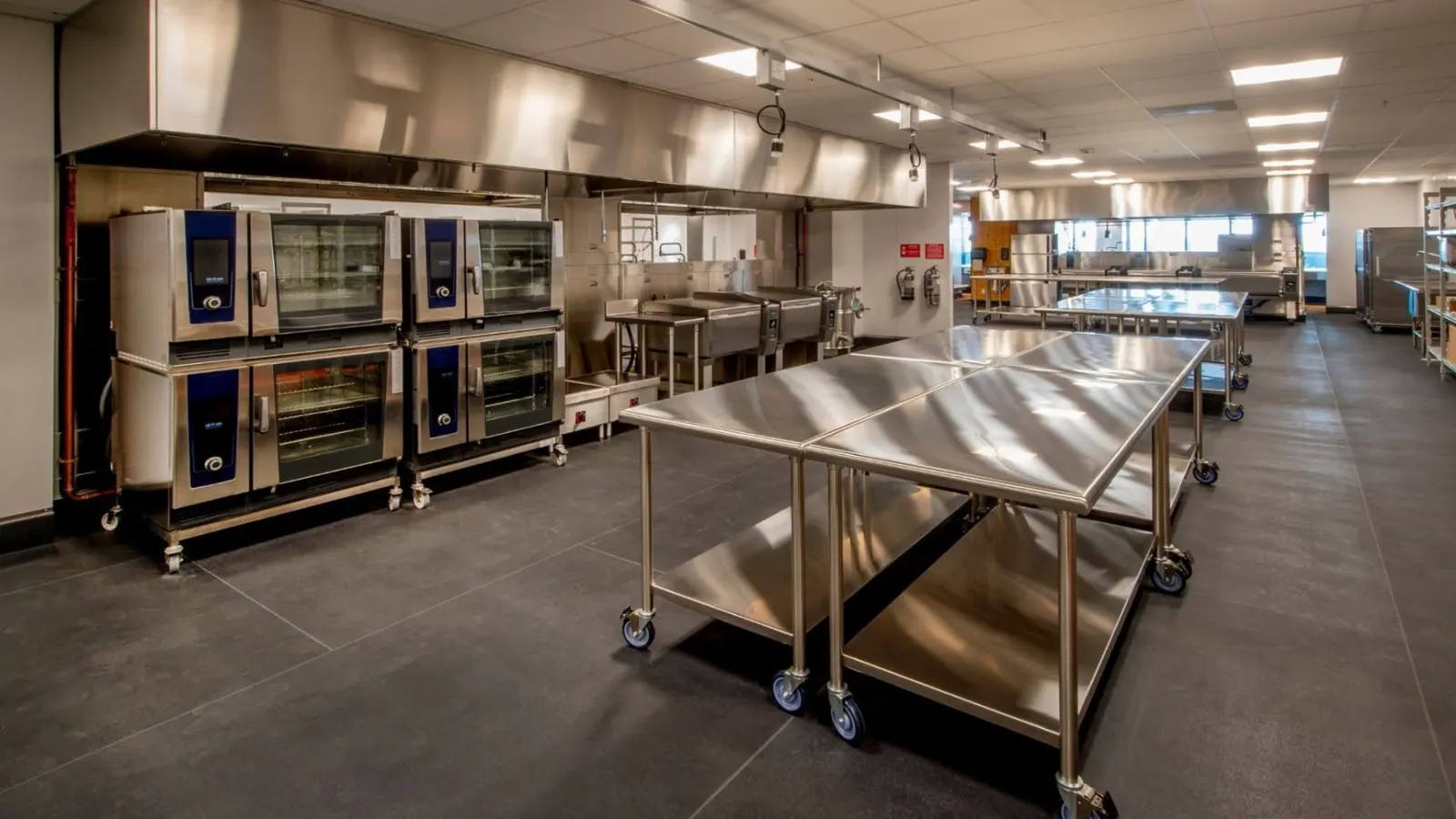
Commercial kitchen paint requirements aren't a style preference, they're an inspection line item. A restaurant owner who repaints a kitchen in whatever finish looks good in the dining room risks failing the next health inspection, because food prep walls have to meet specific surface standards that have nothing to do with color and everything to do with cleanability.
This is the gap between a restaurant repaint and a house repaint: the paint itself has to pass a different test, and getting it wrong doesn't just mean a redo, it can mean a failed inspection that shows up on the public rating posted at the front door.
What San Diego County Actually Requires on Kitchen Walls
Under the California Retail Food Code, walls and ceilings in food preparation areas must have durable, smooth, nonabsorbent, and washable surfaces, and San Diego County's own food facility construction guidance goes further, recommending light-colored finishes specifically so inspectors and staff can spot dirt and grime during routine cleaning. The same guidance notes that walls in certain areas, dish pits, walk-in coolers, and anywhere steam or splash is constant, are also required to be durable enough to withstand ongoing moisture exposure, not just wipeable in dry conditions.
Rough plaster, unsealed drywall, or heavily textured finishes don't qualify, they trap grease and can't be scrubbed down without degrading. In practice, this rules out flat or matte paint entirely in prep areas, dish pits, and walk-in coolers. It also means any texture heavier than a light orange peel is a problem, since texture creates grease-trapping crevices that a smooth finish doesn't have. If an existing kitchen has heavily textured walls, a repaint alone won't bring it into compliance, the texture itself has to be addressed first, typically with a skim coat before any paint goes on.
Choosing a Finish That Survives Grease, Steam, and Daily Scrubbing
A gloss or semi-gloss enamel or epoxy-based paint is the standard choice for kitchen walls precisely because it can be wiped down repeatedly with degreasers and sanitizing solutions without breaking down. Dining rooms and customer-facing areas don't carry the same code requirement, which is why a restaurant repaint often uses two different finish strategies in one building: a durable, code-compliant coating in the back of house, and a more design-driven palette out front.
This split matters for planning and pricing. A contractor quoting a restaurant repaint needs to know from the start which areas are food-prep spaces subject to health code review and which are dining-room walls where finish choice is purely aesthetic. Treating the whole space the same way either overspends on the dining room or undershoots the kitchen. It's worth walking the space with the contractor room by room before the quote is finalized, rather than handing over a floor plan and letting assumptions fill in the gaps.
Scheduling Around Service Hours
Restaurants can't close for a multi-day repaint the way an office can shut down for a weekend. The standard approach, and the one built into AL's Quality's commercial painting process for restaurant clients, is working after close, overnight, so the kitchen is fully cured and odor-free before the next morning's prep starts. Low-VOC coatings that meet California's architectural coatings rules make same-day-to-next-morning turnaround realistic in a way that older, high-VOC enamels never could.
For a full kitchen repaint that can't realistically finish in a single overnight window, phasing by station, walls behind the line first, then the dish pit, then walk-in coolers, keeps at least part of the kitchen operational on nights where a full shutdown isn't an option.
Timing the Repaint Around the Inspection Cycle
Health inspections in San Diego County typically happen on a routine schedule, and a repaint scheduled to finish shortly before an expected inspection window gives an owner a chance to walk the finished kitchen and confirm the finish looks right before an inspector does. It also helps to have the contractor's product data sheets on hand for the finish used in food-prep areas. If an inspector asks about a specific wall, being able to show the actual coating specification is faster than trying to explain it after the fact.
Getting a Code-Compliant Repaint Without Failing the Next Inspection
Commercial kitchen paint requirements come down to one test: can it be scrubbed clean, repeatedly, without breaking down. Get that wrong in a food prep area and the repaint becomes a health inspection problem instead of a cosmetic upgrade.
If you're planning a restaurant repaint in North County San Diego, request a free quote from a crew that's painted for McDonald's and dozens of local restaurants and knows which finish goes where.
Frequently Asked Questions
Can I use the same paint in my dining room and my kitchen?
Not for the areas that matter to code compliance. Food prep areas need a durable, smooth, washable finish under California's Retail Food Code, while dining rooms have no such requirement and can use any finish that fits the design.
What paint finish is required in a commercial kitchen?
A gloss or semi-gloss enamel or epoxy-based coating is the standard choice, since it holds up to repeated scrubbing with degreasers and sanitizers without breaking down.
Does textured drywall need to be fixed before repainting a kitchen?
Yes, if the texture is heavier than a light orange peel. Heavy texture traps grease and can't be brought into code compliance with paint alone, it typically needs a skim coat first.
Can a restaurant kitchen be repainted without closing for a full day?
Usually, yes. Overnight work after close, using fast-curing low-VOC coatings, is the standard approach so the kitchen is ready by the next morning's prep.
Should a restaurant repaint be scheduled around health inspections?
It's a smart practice to finish shortly before an expected inspection window and keep the coating's product data sheet on hand in case an inspector has questions about the finish used.
Free written estimates across North County San Diego.
Licensed #699636, fully insured, 3-year warranty on every project.